
If you’ve ever bumped into a door while carrying groceries, struggled to furnish a room around a door swing, or wished two spaces could feel like one without a full wall removal cavity, sliding pocket doors are the answer you’ve been looking for.
They’re one of the most requested features we install at Boyd Remodeling and Construction, and for good reason. Done right, they’re a seamless, elegant solution that transforms how a home lives. Done wrong, they rattle, stick, and become a source of daily frustration. In this post, we’ll walk you through everything you need to know including why soft-close hardware is the detail that separates a premium installation from a regrettable one.
ARTICLE OVERVIEW
This guide covers everything Treasure Valley homeowners need to know about cavity sliding pocket doors:
- What they are and how they differ from barn doors
- Top benefits: space, flow, aesthetics, and ADA accessibility
- Why soft-close hardware is non-negotiable for longevity and premium feel
- Step-by-step breakdown of a quality installation
- Answers to the most common homeowner questions
- How Boyd Remodeling approaches pocket door projects across the Treasure Valley
Serving Boise, Eagle, Meridian, Nampa, and surrounding Treasure Valley communities.
What Is a Cavity Sliding Pocket Door?
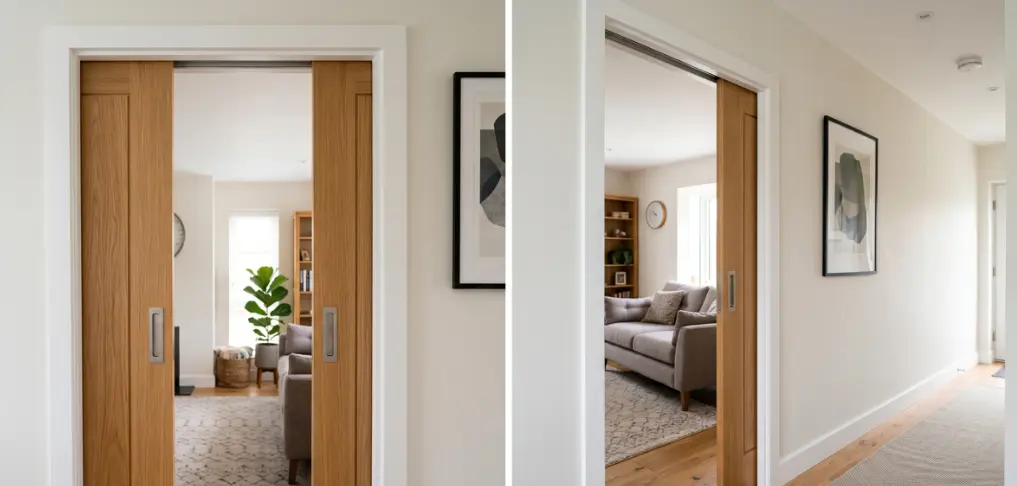
A cavity sliding pocket door is a door that slides horizontally into a recessed cavity built into the wall, disappearing completely when open. Unlike a barn door, which slides along an exposed track on the face of the wall, a pocket door tucks away entirely, leaving the wall clean and the space uninterrupted.
This distinction matters a lot in luxury residential design. Barn doors have their place, but they’re a visible design statement. Pocket doors are architectural; they give you function without the feature.
Why Homeowners Choose Pocket Doors
Space Recovery
Every swing door claims a footprint. In a standard bedroom, a 32-inch door sweeps a 2.5-square-foot arc of unusable floor space. In a tight hallway, master bath, or home office, that’s real square footage lost to a hinge. Pocket doors give that space back.
Flow Between Rooms
Want your kitchen and dining room to feel open when entertaining but separate when needed? A pocket door handles that without a barn door track running across your ceiling or a wall that’s either always up or always down. It’s the most flexible privacy solution in residential design.
Clean, Modern Aesthetic
In high-end finishes and open-concept spaces, visible hardware is a design liability. Pocket doors remove the visual interruption of a swing door entirely flush with the wall, no hardware when open, minimal profile when closed.
ADA and Accessibility Considerations
Pocket doors require less physical force to operate and eliminate the need to step back to clear a door swing making them an excellent choice for aging-in-place remodels and accessible design. Learn more about how we approach accessible home additions.
The Case for Soft-Close Hardware
Here’s where most pocket door installations fall short.
A standard pocket door on basic rollers will work fine for a while until it doesn’t. Over time, the door begins to drift open or closed on its own, slams into the jamb or the back of the cavity, and the track loosens from repeated impact. What started as a sleek feature becomes an annoyance.
Soft-close pocket door hardware solves all of this.
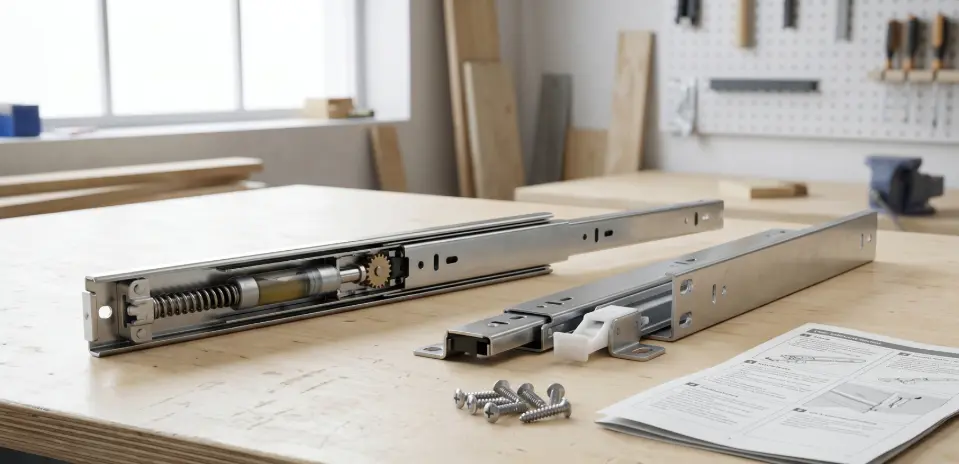
Soft-close systems use a dampened hydraulic mechanism integrated into the track or roller, the same technology you see in high-end drawer slides and cabinet hinges. As the door approaches the end of its travel, the mechanism engages and gently decelerates the door, pulling it flush silently and smoothly.
The benefits are significant:
- No slamming. The door never crashes into the jamb or cavity, protecting both the door and the framing.
- No drifting. The mechanism holds the door in place at either end of travel without latches or stoppers.
- Quieter home. Especially in master suites, nurseries, and home offices, silent operation is a quality-of-life upgrade.
- Longer lifespan. Reduced impact means less wear on the track, rollers, and door your investment lasts longer.
- Premium feel. Every time the door closes with that smooth, deliberate motion, it communicates quality. It’s one of those details clients notice immediately.
Leading hardware systems we commonly specify include Häfele, Eclisse, and Johnson Hardware’s soft-close series all engineered for residential pocket door applications with weight ratings appropriate for solid-core doors.
What Goes Into a Quality Installation
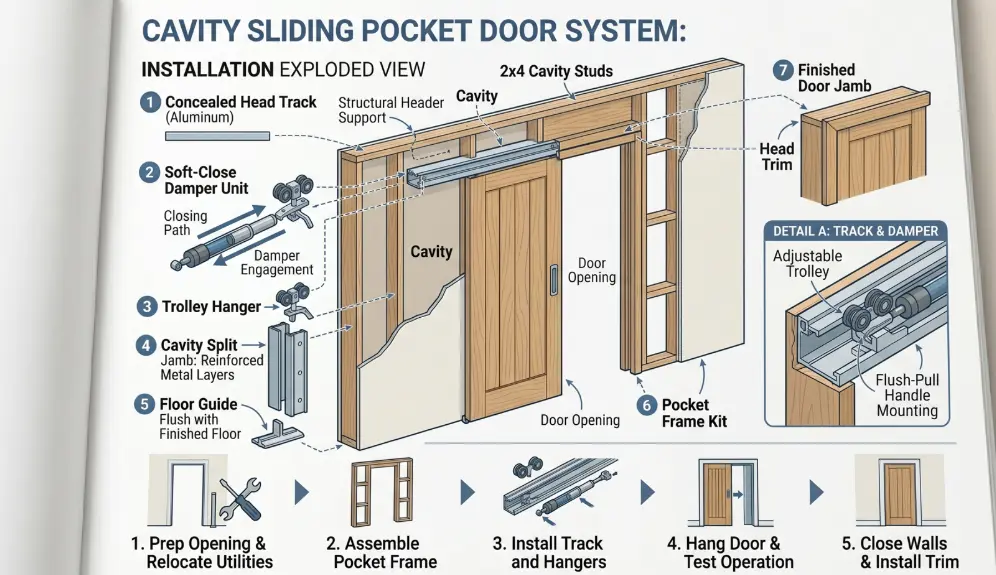
Cavity sliding pocket doors are not a DIY-friendly project and not something to hand off to a general handyman. The installation involves structural work that, if done incorrectly, creates problems that are expensive to fix. See our full process to understand how Boyd approaches every project.
Here’s what a proper installation looks like:
1. Structural Assessment
Before anything else, we determine whether the wall is load-bearing. A load-bearing wall doesn’t mean you can’t have a pocket door, it means the framing solution changes. A structural header must be properly sized and supported, often with temporary shoring during construction. Skipping this step is how projects end in cracked drywall and settlement issues.
2. Pocket Frame System
The pocket is formed using a steel or steel-reinforced wood kit that creates the cavity inside the wall. The kit must be plumb, square, and rigid; any flex will telegraph to the door’s operation over time. We use commercial-grade pocket door frames, not budget hardware-store kits that flex under the weight of a solid-core door.
3. Door Selection
Hollow-core doors are lighter, but solid-core doors provide superior sound isolation, a more substantial feel, and better longevity. For most luxury remodels, we default to solid-core with hardware rated to 150–200 lbs to match.
4. Track and Roller Installation
The track must be level and continuous, with no deflection across its span. Rollers are adjusted so the door hangs plumb and glides without binding. This is where the soft-close mechanism is integrated and calibrated.
5. Drywall, Finishing, and Trim
Once the frame is in, the wall is drywalled and finished like any other surface. The pocket opening is trimmed with appropriate casing or left flush for a contemporary look. Recessed flush pulls are installed on the door face for a clean grip point.
Common Questions We Hear
Can you add a pocket door to an existing wall?
Yes but it requires opening up the wall, and sometimes modifying framing on both sides. It’s far less disruptive than people assume when done by a team that’s done it dozens of times. View our project portfolio to see the range of work we’ve completed.
What about plumbing and electrical in the wall?
Pocket doors require a clear cavity, so any plumbing, electrical, or HVAC in that wall section needs to be rerouted. We assess this during the planning phase and coordinate with our trade partners before demo begins.
Can pocket doors be used for exterior applications?
Generally, no standard pocket door systems aren’t rated for exterior use. For exterior sliding applications, purpose-built systems like LaCantina or NanaWall are a different product category. Explore our outdoor living spaces for exterior design solutions.
Are they harder to lock?
There are flush-mounted privacy latches and keyed lock options designed specifically for pocket doors. They work well for bathrooms and bedrooms just a bit different from a traditional lever set.
Is It Right for Your Project?
Cavity sliding pocket doors are a strong candidate if you’re remodeling a space where:
- A swing door creates a layout conflict
- You want visual openness with the option for privacy
- You’re building out a master bath, walk-in closet, or home addition
- Sound control between rooms is a priority
- You want the finished product to feel intentional and high-end
They’re not ideal for every situation: high-traffic exterior adjacent openings, walls with unavoidable mechanical runs, or spaces where wall depth can’t accommodate the pocket frame are all constraints worth discussing before committing to the design.
The Boyd Remodeling Approach
At Boyd Remodeling and Construction, we spec cavity sliding pocket doors regularly across our Treasure Valley projects master suite remodels in Eagle, whole-home renovations in the Boise foothills, and luxury additions throughout Meridian and Nampa. Soft-close hardware is standard for us. We’ve seen what happens when it’s skipped, and we’re not willing to deliver a product that will frustrate a client in six months.
If you’re exploring a remodel where pocket doors might make sense, we’re happy to walk through the feasibility in a design consultation. We’ll tell you what it takes, what it costs, and whether it’s the right call for your space.
Ready to talk through your project? Contact Boyd Remodeling and Construction to schedule a consultation.
Boyd Remodeling and Construction is a design-build remodeling firm serving the Treasure Valley — Boise, Eagle, Meridian, Nampa, and surrounding communities. We specialize in luxury residential remodeling, whole-home renovations, and high-end additions.